Martin Guitar
190 years of craft. The strongest brand voice on the site is three clicks from the homepage.
Same eight lenses. This one’s personal because I play a Martin and I walked into this site with a picture in my head of what it should feel like. The lenses help with that. They don’t care what I expected. They evaluate what’s there.
What’s there is a split. The best content I’ve found on any brand site is three clicks deep on a page most visitors will never see. The weakest content is the homepage.
C.F. Martin & Co. EST. 1833. Script lettering, hand-drawn feel. Four words and a date and I think the mark is doing more to communicate craft than anything else on the site.
Dark green header, warm whites, gold accents. Natural tones. The palette feels like heritage but it doesn't tell you much about what kind.

Sans-serif, same family and weight everywhere. 'Still Handmade' is set in the same type as the product catalog. A company built on handcraft using type that could come from anywhere.
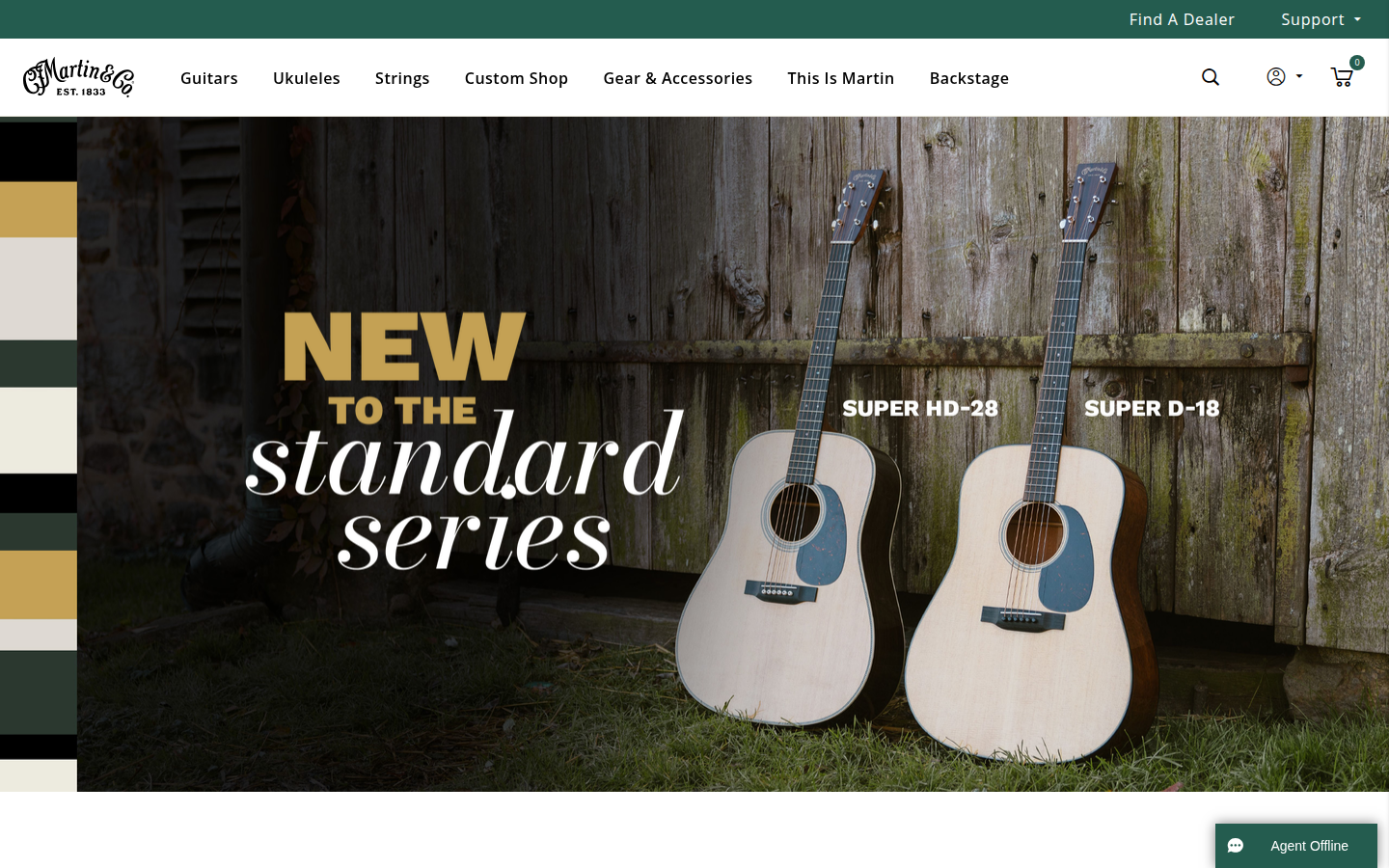
2026 models, a membership promotion, a strings launch, a Road Series refresh. Five sections competing. I'm looking for the workshop and I'm in a lobby.
At Martin, evolution is part of the tradition. In 2026, we're continuing to push forward with fresh ideas, refined craftsmanship, and bold new directions—while staying true to the heritage that defines us.
Homepage hero
Strip the logo and this is any heritage brand in any industry. Watch company. Whiskey brand. Leather goods. The voice has drifted so far from the people who actually make these guitars that the front door could belong to anyone.
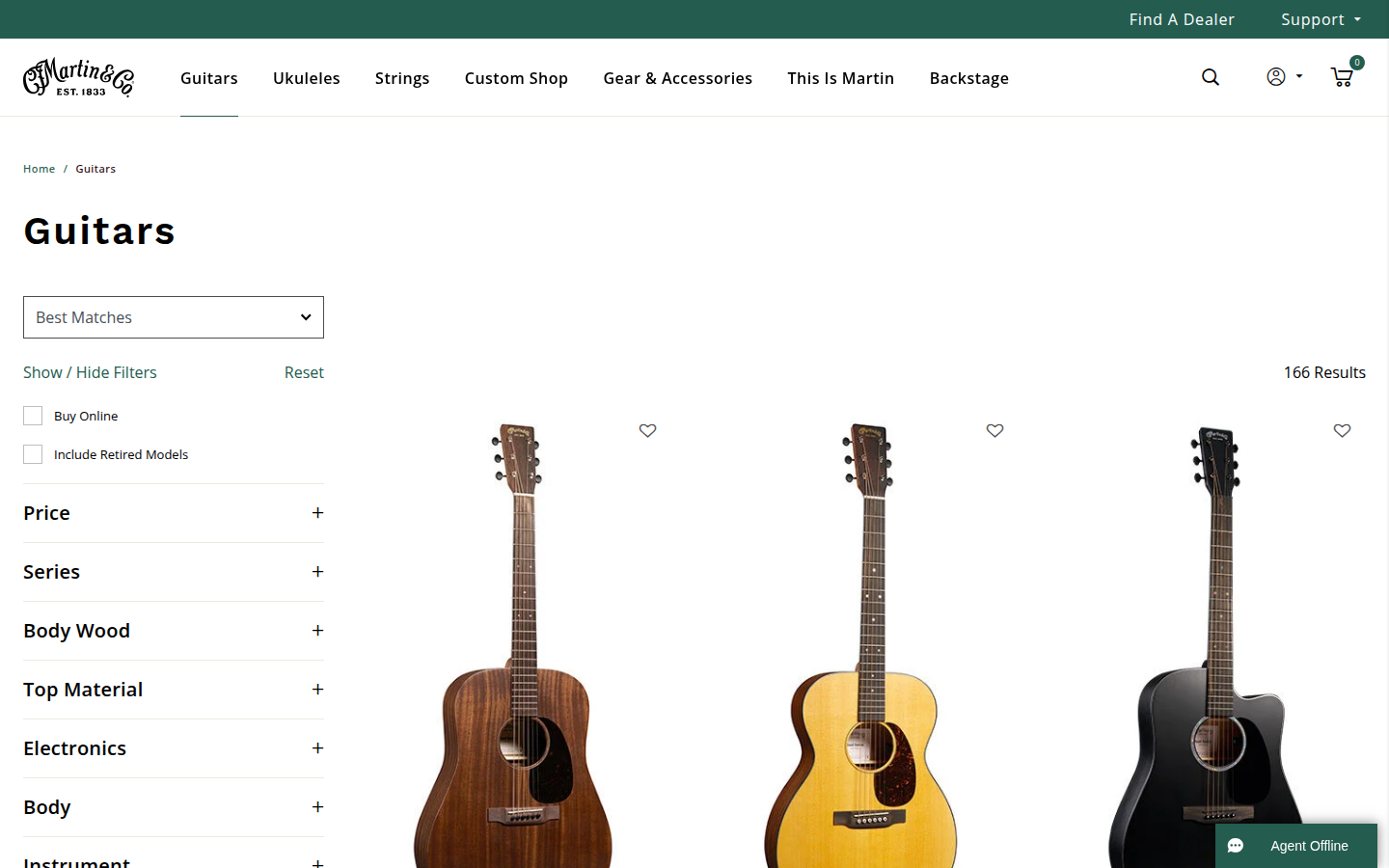
166 guitars in a grid. Model number, price, two photos, filter by spec. If you know what a dreadnought is, this works. If you're a first-time buyer, this is a wall. No editorial guidance. No 'start here.' No curation by playing style.
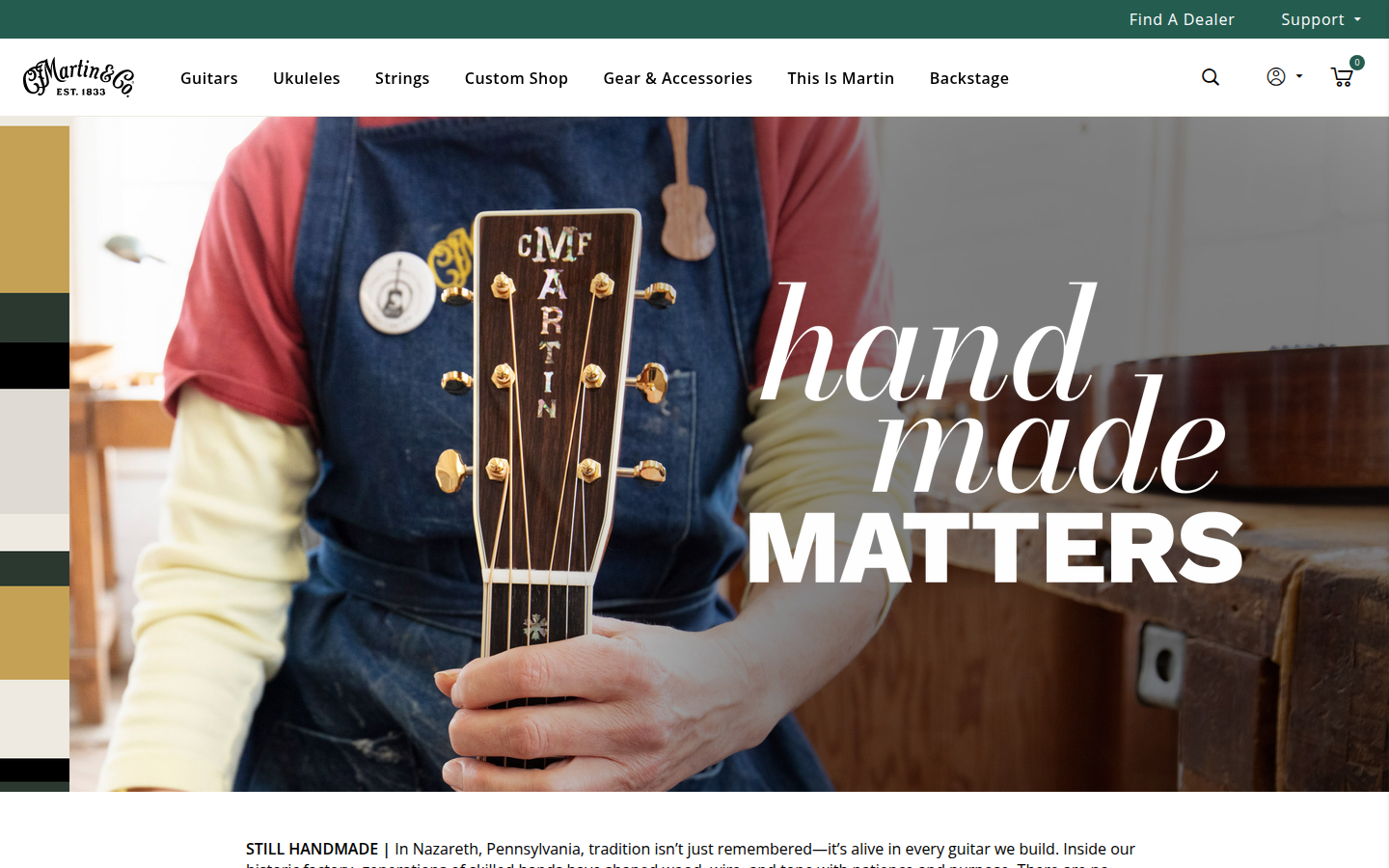
This page is three clicks deep under 'This is Martin' and I almost didn't find it. Named workers with decades of tenure, personal standards stated plainly. I think this is the strongest brand voice I've come across in any of these readings and it's buried where most visitors will never see it.
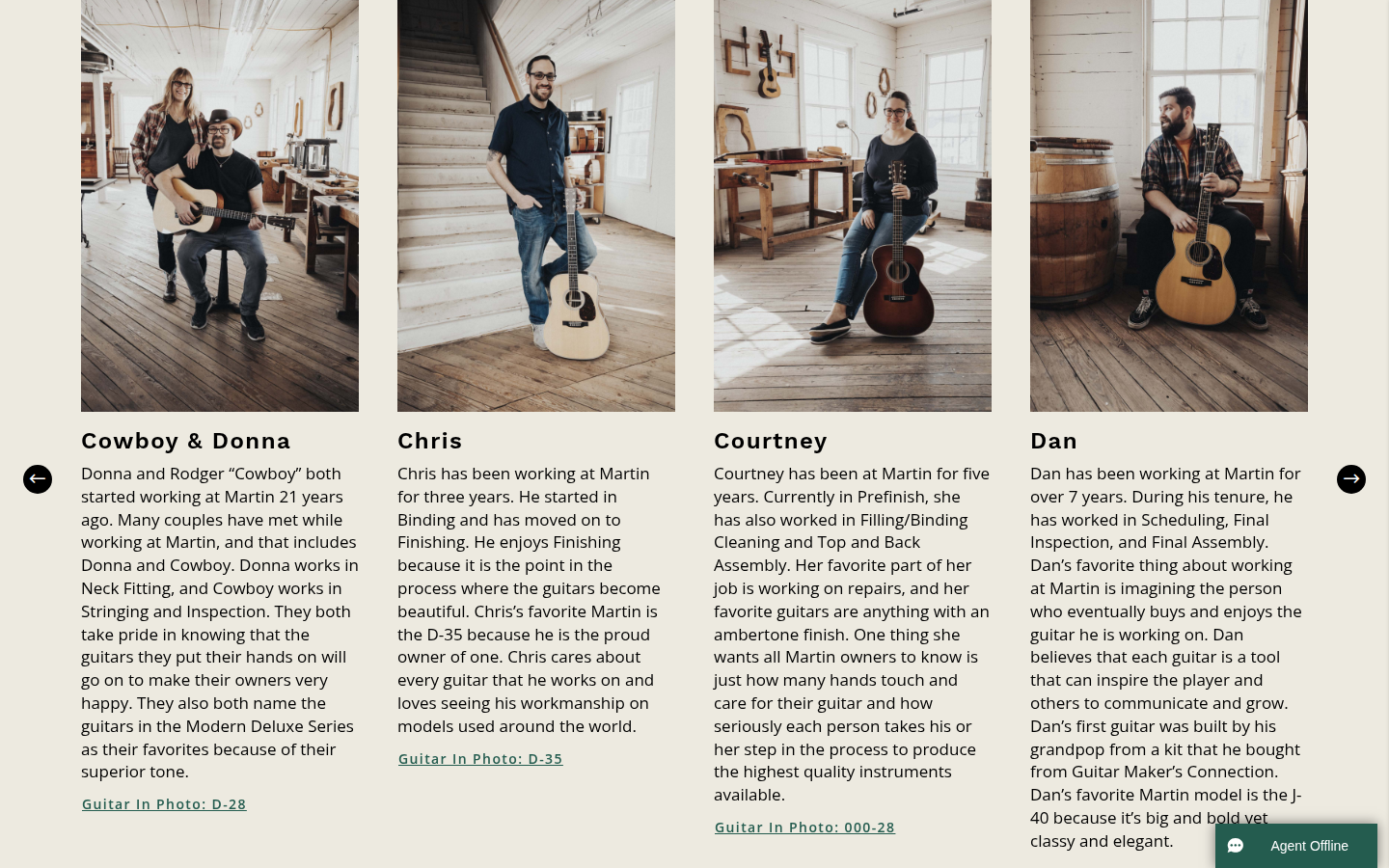
Jody, 33 years. Kim and Heather, working together. Randy's family, multiple generations. One of them says she won't let a guitar leave her hands if it's not up to the same quality she'd choose for herself. I read that and I think about the homepage copy and I don't understand how the same company produced both pages.
Still Handmade
Product catalog
I keep putting these two pages next to each other because the gap is the whole finding. One is warm and specific and human. The other is clinical and anonymous and organized by spec. Same brand, and they don't feel like the same company.
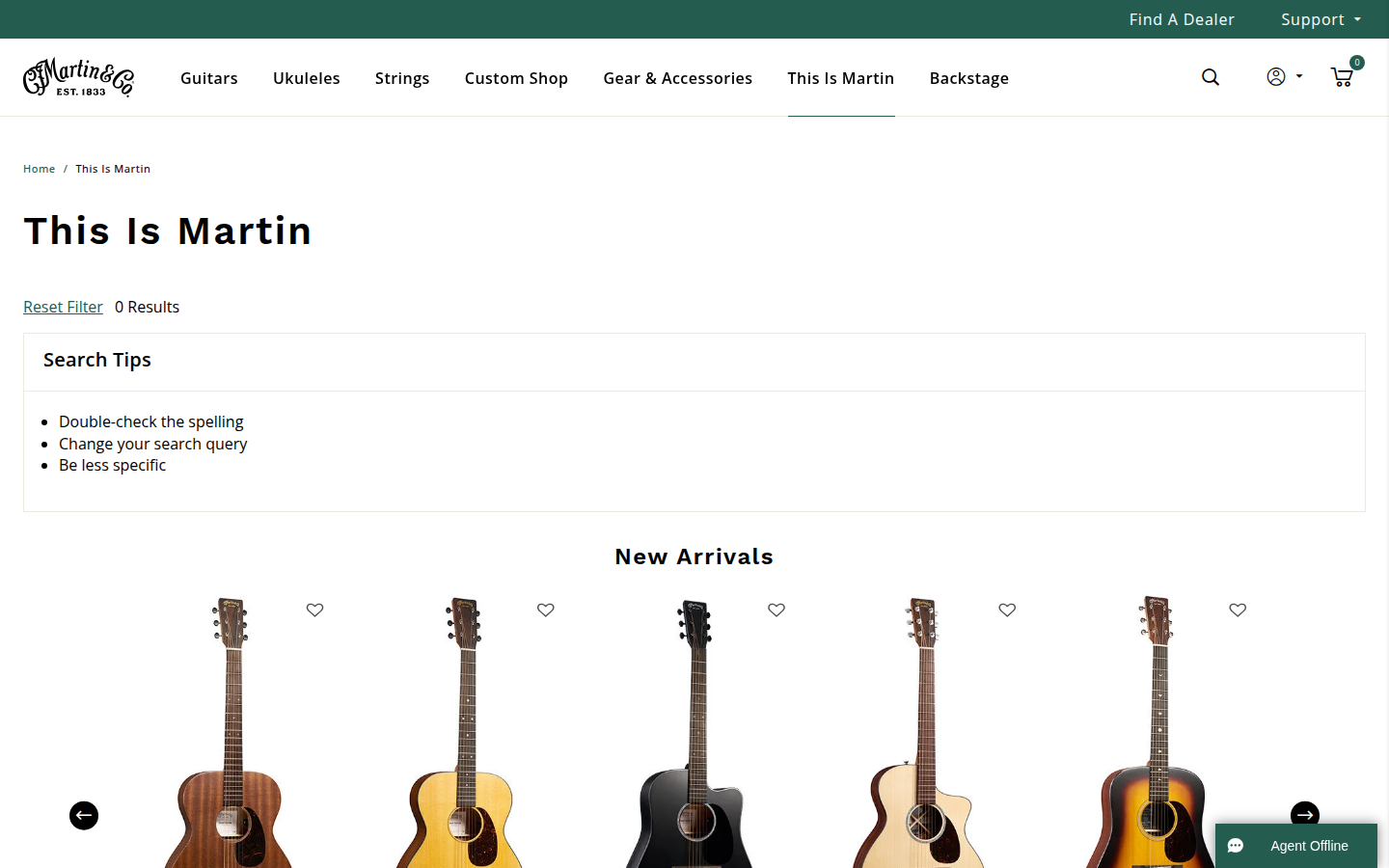
Journal, lesson room, events calendar, artist showcase. The intention for a living knowledge base is here. But the product catalog has none of it woven through. The heritage stops at the doorway of the catalog.
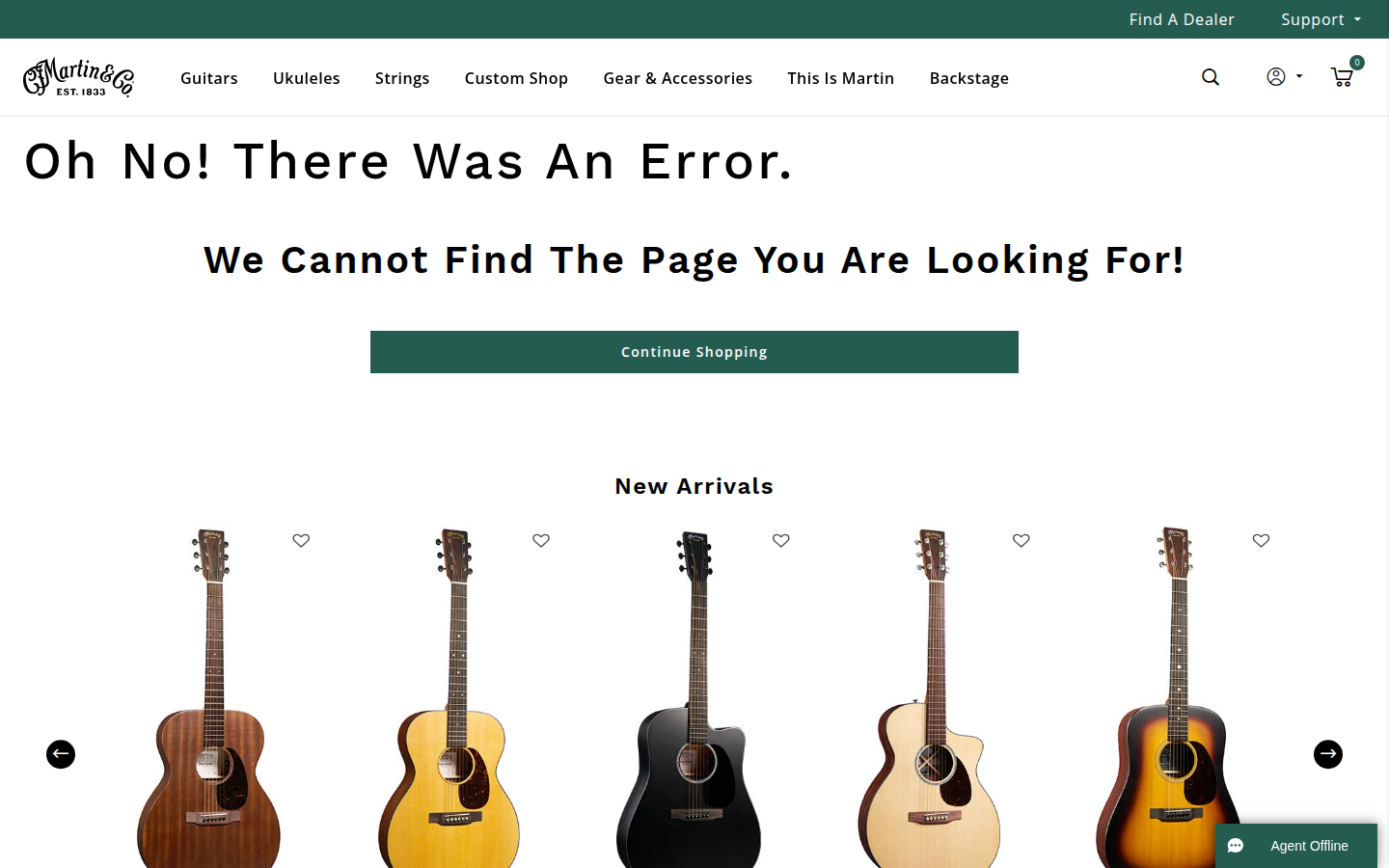
'Oh No! There Was An Error.' Then 'Continue Shopping' and a carousel of New Arrivals. The 404 is a sales opportunity. The voice is suddenly casual in a way the rest of the site isn't. Even the error page can't decide what room it's in.
Analysis
Martin has the raw material for the most compelling brand story in musical instruments. A factory in Nazareth, Pennsylvania. Workers who’ve been there longer than most companies have existed. A continuous line from 1833 to the D-28 hanging in a shop right now. And they buried it behind a homepage that could belong to Fender or Taylor or anyone.
This is coherence loss at the front door. The copy says craft but the voice says committee. The brand voice that lives in “Still Handmade” never makes it to the homepage or the catalog. Two different teams, two different priorities, and nobody checked whether they felt like the same company.
I think about what this means as AI tools enter the content pipeline. Martin’s product catalog is exactly the kind of content that AI generates well: specs, descriptions, organized grids. The structural system that would thread the workshop story through every product page doesn’t exist. So the catalog wins by volume and the brand voice that Jody and Kim and Randy represent gets buried even deeper.
A D-28 product page could mention that this model has been in continuous production since 1931. It doesn’t. The heritage stops at the doorway of the catalog. Without someone paying attention to where the story is and isn’t, the disconnect between the workshop and the showroom only grows.
Martin’s real room is the workshop. The website put the workshop in the back of the building and a lobby out front.